Love is life’s kiss, but the digital era has changed the game. So, why are we still betting everything on the swipe?
BY SWIPE CO-FOUNDER LIUBA ROMANOVA
Jake Osorio, founder of the PULSERA dating app, explains it all in the big interview for SWIPE
At just 22 years old, Jake Osorio is already operating in a future that the rest of the dating industry is only just beginning to contemplate. He isn't interested in the “swipe,” the “scroll,” or the gamification of human connection. In fact, he isn't even interested in building a traditional app. Sitting across from him, you realise quickly that Osorio is the architect of a “Non-App” revolution. His latest venture, PULSERA, is a bold attempt to dismantle the digital pen-pal culture that has come to define modern romance, and he’s doing it all through a platform you already use every day — WhatsApp.

Image soure: PULSERA
The WhatsApp Wingwoman
The core of PULSERA is a rejection of the high-friction world of the App Store. “The fact that we're not an app is the main thing,” Osorio explains. He adds: “It's basically an AI that kind of sets you up on dates”. Instead of spending hours curating a profile or browsing an endless deck of faces, the user experience begins with a simple conversation on WhatsApp.
“You tell our AI, and you tell us what you're looking for, a bit about you, and that help us, I guess, build a profile of you and understand you,” Osorio says. This AI acts as a digital wingwoman, learning your preferences through natural dialogue rather than rigid forms. Once the AI understands your “hard deal-breakers” and goals, whether they be marriage, short-term fun or just making new friends—it gets to work.
The vision is to bypass the “pen-pal stage” entirely—that digital purgatory where matches text for days only for the momentum to die before a meeting. PULSERA’s AI proposes specific, low-stakes dates. “For example, next week, Richmond Park at 2pm, would you like to go?” If both parties agree, the date is sorted. “The vision of that is to make dating easy again, by just showing up to your dates,” Osorio notes. “You don't need to swipe, you don't need to chat constantly, you just kind of show up”.
The UCL Prodigy: From Sleeping Pods to Software
While PULSERA is Osorio's current focus, his ability to disrupt a multi-billion-dollar industry was forged during his time as an exceptionally driven student at the University College London (UCL). He describes himself as “quite entrepreneurial since young,” with a desire to own his own business dating back to age 13.
During his final year at university, while his peers were focused on grades, Osorio was managing a hardware startup called Snuze, which focused on “sleeping pods”—affordable, high-tech places to nap or stay overnight in London. The venture was no mere student project, Osorio and his co-founder raised a significant amount of money and found themselves negotiating with some of the largest landlords in the world.
“We were about to sign a lease at Waterloo Station,” Osorio recalls of the exciting post-graduation months. Although he eventually made an “early exit” by selling the business, the experience cemented his love for the startup world. After a few months of reflection, he decided to pivot to software and the consumer space, driven by a desire to build something “that everyone might actually use”.
Flipping the Model: Outcome Over Retention
Osorio’s transition to the dating sector was born from a realisation that the current market leaders—the Hinges and Bumbles of the worldare incentivised to keep users lonely. “Their current system is to try to keep you on the platform as long as possible because that’s how they make money,” he points out.
PULSERA is designed to “flip the model on its head”. Instead of monetisation through subscription-fueled retention, Osorio is exploring outcome-based models, such as commission from date venues or small “pay-per-date” fees. “We’re trying to do the opposite, trying to, I guess, make money by like in terms of the outcomes that we provide,” he says.
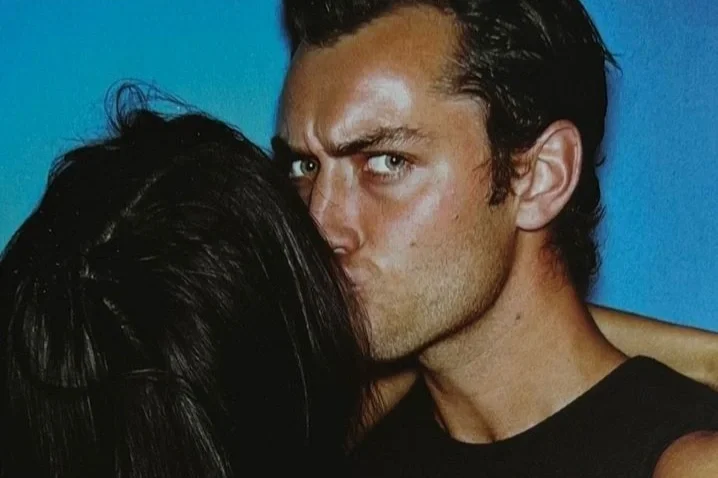
Image source: Jude Law by Young Richard, 1999
This philosophy extends to the “Paradox of Choice”. While traditional apps boast of thousands of matches, PULSERA prioritises a “semi-blind” approach with lower volume but higher compatibility. “For us, you might get like four or five matches a month and ideally you probably date all of them,” Osorio suggests. By reducing the “bubble of choice,” he aims to alleviate the stress of filtering and bring back the “novelty of dating”.
Safety, AI and the Human Element
Recognising that meeting a stranger with minimal digital preamble can be daunting, Osorio is building in safeguards to “alleviate the stress”. PULSERA is exploring an integrated FaceTime platform that allows for a 5-to-10-minute “vibe check” without users having to exchange personal phone numbers.
Osorio is also pragmatic about the role of AI. While he acknowledges the “dystopian” fears surrounding the tech, he insists that PULSERA uses it to facilitate—not replace—interpersonal connection. “Ideally, we're trying to get you spending less time on like apps and less time chatting with our AI and more time actually just going on more dates,” he says.

Image source: Johnny Depp and Kate Moss by Annie Leibovitz, 1994
Looking further into the future, Osorio envisions a level of AI personalisation that bypasses onboarding questions entirely by analysing real-world data. “Imagine having access to your email data, we know what Netflix shows you're watching,” he muses. “We just get you the matches that make the most sense based on what you actually do, not what you say”.
A Vision for the Future
Despite being the mind behind a dating revolution, Osorio is a romantic pragmatist who has been in a committed relationship for four years. “I think love is just a fascinating thing,” he says. “I think we humans are built for aspiring to love”.
Currently, PULSERA is in its early testing phase with a waitlist of 250+ signups, primarily gathered through organic outreach to the university ecosystem. While the initial focus is on the 18-to-24 demographic, Osorio has his sights set on the 26-to-40-year-olds who “take it a lot more seriously”.
As the interview concludes, Osorio is already moving toward his next task—a marketing shoot filming first dates to prove the concept. He is a man who doesn't just want to build an app; he wants to solve a fundamental human problem. “I think people will be like, this is way better than apps," he concludes. “It makes sense and hopefully gets them dating more".
For the readers of SWIPEthe message from PULSERA prodigy is clear: Stop betting on the swipe. Start betting on the date.
