Alternative Opinion:The Click of a Button or Why the Social Media Age Made Cheating Easier
BY SWIPE CO-FOUNDER LIUBA ROMANOVA
If Instagram had been around in the Natasha Naginsky era, she probably would’ve caught Big and Carrie in the DMs without ever having to break a tooth chasing a side chick out of her house. Because cheating has never been in its peak era quite like right now. Social media has made it all easier, faster, and somehow more “secure”—it’s never been this effortless to cross the line.
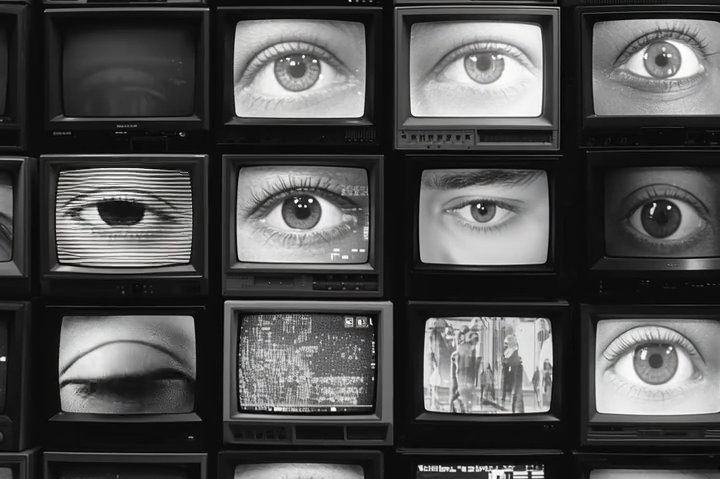
Image source: Pinterest via Spongebob credit
In an age where a light, flirty text is barely even considered cheating, I wasn’t an exception to potentially becoming a side chick. It happened in my DMs when an old encounter messaged me some “funny” words, hinting at us having an affair the next time I’m in Barcelona. In fact, let’s call him John—he’s been in a failing long-distance relationship for two years, after spending a full year “testing the waters” with his girlfriend before they were even official. And even though his offer to commit such indecent acts didn't succeed—not with a girl who knows her worth and wants zero drama—my mind was still occupied with it. Long after he started this whole “proposal business,” I couldn't stop wondering what it really meant from his side, and why he would even go there?
However, the question really drenching my brain wasn’t even about why he did it. I wasn’t trying to solve the puzzle of my old friend’s morality. What haunted me more was the thought that social media has made cheating easier simply because the definitions have become so distorted. In this digital reality, the boundaries of what 'counts' as an affair are fading into the digital background.
The world of endless communication has become our everyday reality. That exciting wait for a letter from a loved one—and the way it made you value them more—is a thing of the past. The preciousness of keeping real things close has been pushed to the sidelines, replaced by a dopamine rush in the form of digital pings. In this space, boundaries are being demolished by the rapid growth of social media.
As social media grows, the dating process has become so closely tied to these platforms that it has birthed a whole set of specific terms, including orbiting, ghosting, and microtexting. These words act as labels for the different side effects of our digital dating intoxication.
Image source: Pinterest via Fabienne Thuet credit
In John’s case, the correct label is micro-cheating—a phenomenon where small digital actions or subtle shifts in behaviour become a back door for cheating on a partner overall. The phrase first appeared back in 2008 in Urban Dictionary and, surprisingly, it described “grey area” behaviour—essentially flirting without any physical contact. Over time, the meaning shifted to focus on social media, describing flirting and other forms of communication that set the stage for betrayal within the digital world.
According to 2024 research from the Gitnux data aggregation firm, 53% of social media users archive their chats rather than deleting them, specifically so they can revisit those conversations later. The generational gap is clear: Gen Z leads the pack at 55%, followed by Millennials at 30%, while Boomers make up only 15% of this “digital archiving” trend. On top of that, 42% of users are inclined to secretly follow a crush or an ex on multiple platforms simultaneously.
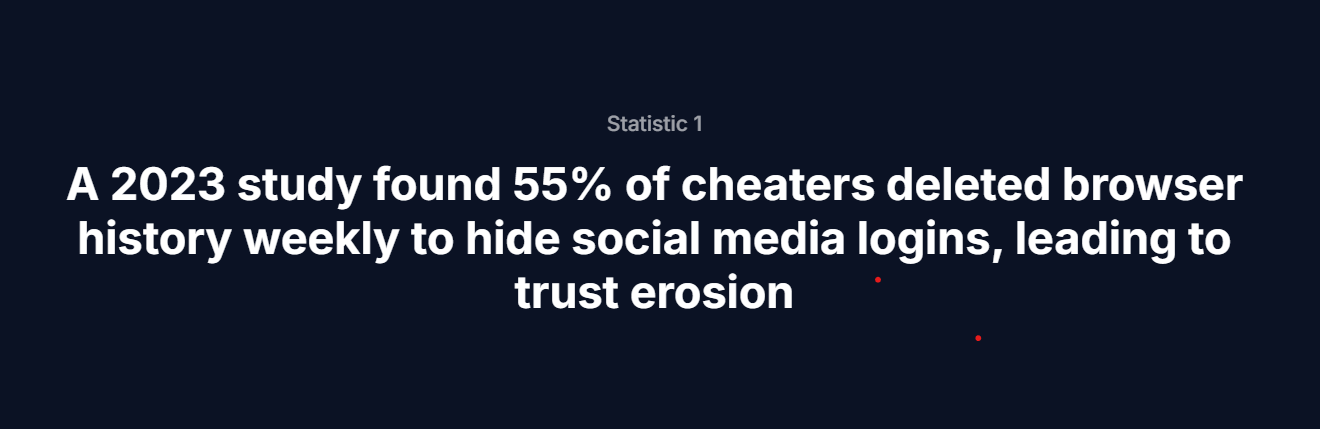
Image source: Gitnux data
Yet, the result of digital micro-cheating is reported to actually have a worse impact on the hurt ones who find out about being betrayed. Unlike a physical affair where a partner might only suspect what happened, digital infidelity allows the betrayed partner to read months of explicit logs, see timestamped photos, and watch the relationship develop in “high definition”. This leads to long-term hyper-vigilance59%—of people who discover digital infidelity report higher rates of depression and the obsessive need to monitor a partner's online status or “following” lists.
Still, the so-called digital dopamine loop is what pulls people in the most. It’s like a drug. The user gets a rush from the communication itself, as DMs are fueled by likes, reposts, and constant hits of attention that become impossible to refuse as they get more intense. Unlike physical betrayal, the reward for this kind of cheating is faster and more accessible. It’s simply available 24/7.
There’s no arguing with that. As someone who’s been responsible from a young age, I never hesitated to call out John’s intentions—at least until I realised that his main goal wasn’t actually my readiness to be a side chick, but simply the craving for attention. However, the one thing I have to give him credit for is his resourcefulness. No one had ever managed to get me sexually and emotionally allured through intellectual debates about the current political climate—especially since there is usually nothing attractive about that topic whatsoever. My bad, really. Engaging with his intellectual “traps” only fed his already overinflated ego, giving him the secure feeling that the door between us was never truly closed.
In a 2016 TED Talks, Dr Michelle Drouin—a developmental psychologist and professor at Purdue University—discussed the phenomenon of the 'never-closed door' created by keeping “back-burners”. These are individuals with whom we are romantically or sexually interested, but not currently involved, whom we keep in contact with in case we might someday connect. According to Drouin, social media has created a “simmering effect,” making breakups feel uncertain rather than definite. We maintain constant access to the lives of former partners or past attractions—even those where the 'real thing' never had a chance to happen. Technology allows us to keep the possibility alive, fueling our own fantasies through the tools on our screens.
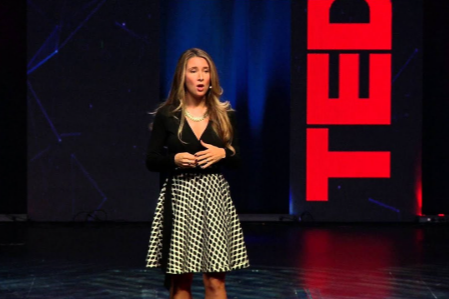
Image source: Michelle Drouin TED Talks, 2016
Looking back now, John’s words about us eventually becoming a couple, despite him having a girlfriend, don’t sound so ridiculous anymore. On the contrary, it feels like I was living through a first-hand scientific experiment, experiencing the data in real-time. Yet, realising that the intimacy of our real-life connection had vanished by a digital dopamine drug—sacrificed for an addiction to attention, has changed how I perceive human connection. The security that real-life communication once provided, along with the genuine joy of shared emotions, has simply evaporated. Seeing how easily a digital connection can overwrite a real one has left me with a lingering fear—an insecurity about opening myself up to others in an era where feelings are so easily digitised.
“Because we are so engaged with technology, we are missing out on immersive intimacy experiences,” Drouin warned back in 2016. She made a point that feels painfully sharp today. In 2026, a “like” or a shared post can feel more “real” than a conversation with someone standing right in front of us—someone ready to give us their best.
The shift toward digital intimacy isn't just about dopamine. It’s about control. According to Gitnux, 62% of young adults now prefer texting over phone calls for “high-stakes” social tasks because it allows them to dictate the pace of the conversation. By avoiding the real-time vulnerability of a voice or a face, they reduce the “opportunity cost” of connection. They can maintain a social “presence” with a back-burner like me while simultaneously working or watching TV, turning what should be a deep human interaction into just another background task.
Perhaps the only thing John can truly be proud of is his ability to multitask—juggling his job projects, his girlfriend and his attempts to lure me in, all at the same time. To manage such a complex “inventory” of attention, I suspect he even turned to ChatGPT to help draft his responses, although I have no evidence yet. It would be the ultimate 2026 move—outsourcing his infidelity to an algorithm.
Despite everything, just as he had the right to open this digital cheating door to my karmic hell, I have the same right to close it by blocking him off from my connections. Not because I'm superstitious, but because a love life is just so much more about real feelings, rather than those wrapped up in likes and DMs.
